
Updated on November 19, 2025. This article was originally written in partnership with Finding Balance, an initiative of the Injury Prevention Centre at the University of Alberta’s School of Public Health.
As we age, staying active and independent becomes one of the most important ways to protect our wellbeing. Preventing falls plays a big part in that journey. Simple daily habits, community support and even new technology, like fall detection devices, makes it easier than ever to live safely and confidently at home or on the go.
Why fall prevention matters for Alberta seniors
Each year, 1 in 3 older Albertans experiences a fall, making it the leading cause of injury among seniors. Beyond the physical toll, a fall can also affect confidence, mobility and independence.
Here are some numbers that the Injury Prevention Centre has sourced from Alberta Health that show the impact of falls in Alberta:
- Every day, 102 Alberta seniors are treated in emergency departments for injuries caused by a fall
- 28 of these seniors need to be admitted to hospital for further treatment
- The average hospital stay following a fall for these seniors is 3 weeks
- In 2021, the health care cost for seniors falls in Alberta was $290 million. Those costs are expected to increase as our senior population is expected to triple by 2046
But it isn’t just about a stressed health care system. Fall prevention and being able to get help in case a fall happens is about autonomy.
For example, with the TELUS Health Medical Alert pendant, loved ones can also stay connected through a mobile app. So, seniors know they can call emergency services if needed, that support is available and they continue to have autonomy. More on that later.
The COVID-19 pandemic complicated matters too. In recent years, many older adults have spent more time indoors. Less movement and fewer social connections have often led to deconditioning, reducing activity that affects strength, balance and overall wellness. The good news is that staying active and connected can reverse these effects and lower the risk of falling.
How to prevent falls at home and in daily life
Creating safe spaces and using supports that help you react quickly if a fall happens are important aspects of fall prevention. We’ll get to that too.
But first things first—falls happen but are not a normal part of aging. It’s important to keep active to improve your strength and balance as you age. Strength and balance can be improved at any age with practice and physical activity. Maintaining good eye health and reviewing your medications are also important factors in reducing your risk of falling.
Here are steps seniors can take to prevent falls:
Reverse deconditioning
If you’ve been less active lately, below are some ideas to start small and reverse deconditioning:
- Stand up and stretch every hour. Try setting an alarm to help you remember
- Take every opportunity to move. Make your bed, prepare meals, garden, fold clothes or do other household chores
- Regularly walk indoors and/or outdoors whenever possible
- Do a physical exercise program at your own pace and according to your abilities. Check out your community facilities for classes and programs
Improve balance and strength
Strong legs and good balance are key to being mobile and steady and fall prevention. Weakness in your lower legs puts you at a higher risk of falling.
Balance is about controlled movements and keeping your body upright whether you’re moving or standing still. Good balance allows people to move without tripping when doing things like stepping off a curb, getting into a vehicle, carrying groceries or going up and down the stairs. To help avoid a fall, balance involves an awareness of where all parts of your body are in space, how fast you can react to unexpected changes or movements and having the necessary muscle strength to stay upright. To improve your balance, it’s important to move your body in a variety of ways.
Below are some suggestions on how to improve your strength and balance. Before getting started, be sure to ask your health care provider about the best exercise program for you.
- Aim for 30 minutes or more of moderate to vigorous physical activity or exercise at least 5 days each week. Moderate intensity means you breathe harder while vigorous intensity means you’re out of breath.
- If you’re just getting started, build up slowly and add a few minutes each day.
- Do activities you enjoy. Maybe walking and biking are your thing. Or gardening. Explore new activities or resume ones that you left behind. That could look like anything from pickleball and golfing to dancing, fitness classes and snowshoeing.
- Include activities that strengthen both arm and leg muscles.
- For balance, try exercises in a standing position, yoga or Tai Chi.
- For strength, try wall push-ups, stair climbing or exercises with weights, bands or body weight.
- For endurance, try walking, dancing, gardening, bicycling, cross-country skiing or swimming.
- Yoga or Tai Chi are great for flexibility too. So is stretching.
Added bonus: Beyond improving your balance and strength and reducing your risk of falling, there are many other benefits to physical activity such as:
- Improved sleep
- Increased energy
- Healthier heart and lungs
- Improved memory and attention
- Improved mood and sense of well-being
- Increased confidence and reduced fear of falling
- Reduced risk of chronic diseases like high blood pressure and heart disease
Maintain good eye health
As you age, it’s important to visit your optometrist or ophthalmologist for a comprehensive eye exam every year to identify any changes to your vision that could increase your risk of falling. Some examples of changes that affect vision with growing age include:
- Development of eye conditions that reduce vision, such as cataracts, glaucoma or macular degeneration
- Eyes taking more time to adjust to changes in light or glare
- Decreased depth perception, making it harder to judge the height and depth of things like stairs and curbs
- Finding it harder to identify objects, especially at night
- Finding it harder to judge the distance from objects
Below are some tips to help you improve and maintain good eye health.
- Keep rooms well lit
- Use high-wattage bulbs
- Keep lighting similar in every room
- Use nightlights or motion sensors in the bathroom and hallways
- Mark the edge of stairs with coloured paint or treads
- Wear sunglasses, even in winter to avoid glare from snow
- Speak with your eye doctor about multi-focal lenses
- Discuss any changes to your eyes or vision with your eye doctor
Did you know? Albertans 65 years of age and older are covered for one eye exam per year under the Alberta Health Care Insurance Plan. There is also a program to help seniors with low to moderate incomes cover the cost of basic optical services, such as eye surgery, medication and non-prescription sunglasses.
Stay on top of your medication
Reviewing all your medications and supplements with a doctor or pharmacist can also help prevent falls. The more medications you’re on, the greater your risk for falls. As you age, your body’s ability to remove medications from your system can lessen and lead to higher risk for side effects. Some prescriptions, over-the-counter medications, vitamins and herbal supplements can increase your risk of falling. For example, medications for sleep, anxiety and depression can make you dizzy, sleepy, confused and unstable on your feet.
Below are some tips to help improve your medication habits.
- Always follow the instructions and prescribed doses when taking medications
- Use only one pharmacy to fill your prescriptions. This allows them to keep track of all the medications you may be on
- Keep a current medication list in your wallet and at home
- Ask your pharmacist about pill packs
- Don’t share prescription medications
- Return expired medications to your pharmacist
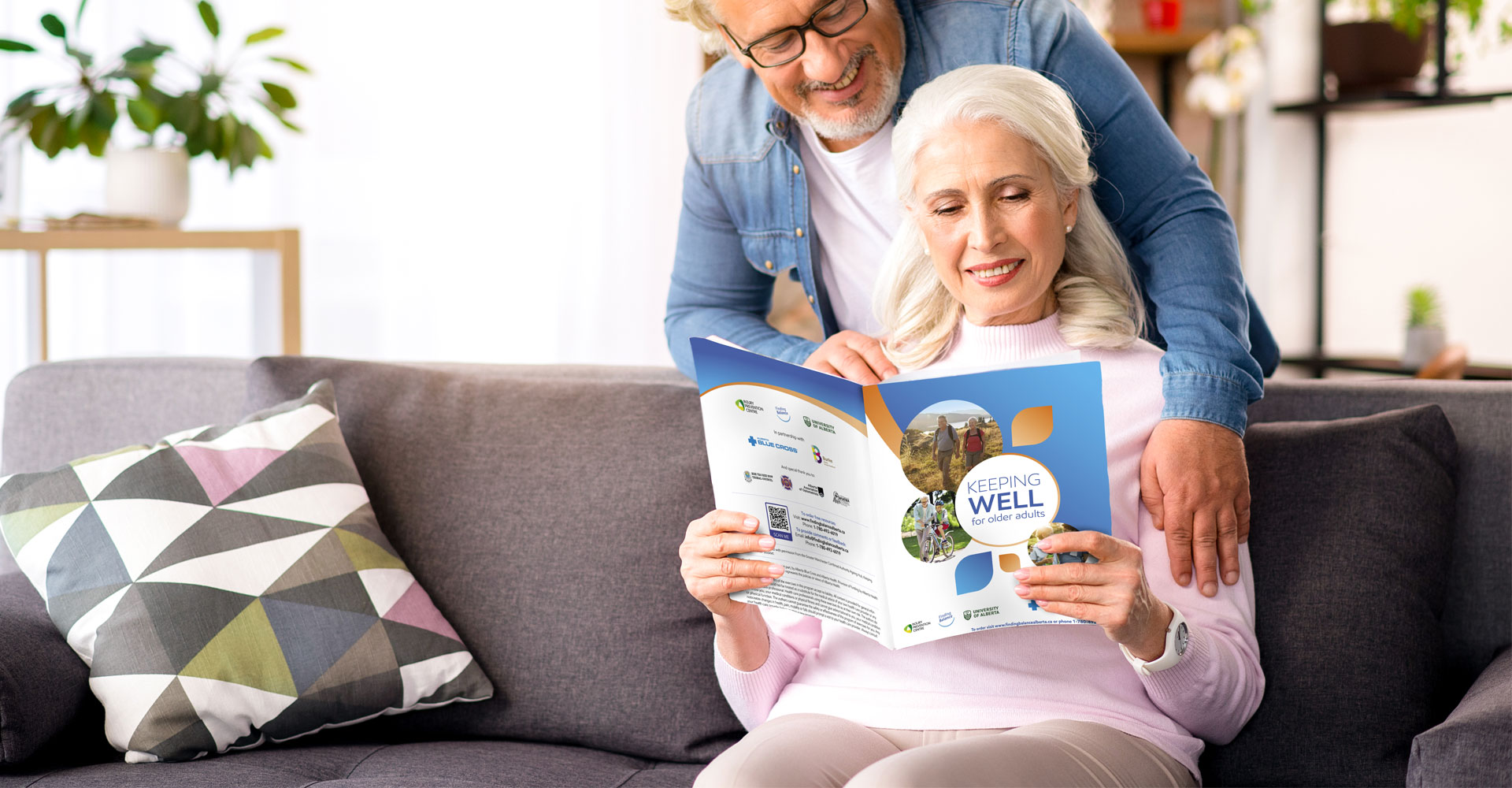
Keeping Well: Fall prevention resource for older adults
In 2021, we teamed up with the Injury Prevention Centre to help create a resource called Keeping Well. It’s a free booklet designed to help older Albertans keep well, active and connected to lower their risk of falling and stay independent.
It contains practical tips on:
- Physical activity and exercise tips
- Nutrition and medication use
- Vision care and fall prevention
- Mental health and avoiding fraud and scams
In its first year, 15,000 copies of Keeping Well were distributed across the province through seniors’ resource and recreation centres, service organizations and independent living residences. Information about the resource was also provided to physicians, nurses and pharmacies to share with patients. We continue to help the Injury Prevention Centre promote it to support the wellbeing of Alberta seniors.
The free booklet is available to download online and printed booklets can be ordered online, by calling 780-492-6019 or dropping an email at info@findingbalancealberta.ca.
How fall detection technology supports independence
Even with the best preparation, falls can still happen, and quick response can make all the difference.
And technology is playing a growing role.
Many fall detection devices use motion technology like algorithms and sensors to help detect the occurrence of a fall. When this happens, these devices trigger alerts, offering 24/7 emergency support in Canada.
Of course, as is the case with any piece of technology, there may be instances the feature might not detect all falls. However, these devices are still the fastest way to get support.
For example, the TELUS Health Medical Alert Pendant, available to Alberta Blue Cross® members at an exclusive rate, offers 24/7 emergency assistance at the push of a button.
The included Caregiver Mobile app helps loved ones stay connected through notifications and updates. Knowing support is available when needed means older adults can keep moving, travelling and living life their way. Enabled independence really.
Learn more about how this device fits into your wellness routine.
Staying protected as you age
Preventing falls is just one part of living well and staying independent. Having the right coverage can help you access care and supports when you them most.
Looking for coverage that supports your independence? Explore our retirement plans that offer flexible options for health, dental and prescription drug for life after work.

Why do seniors need to pay for driver license medical? This should be reimbursed for senior drivers who are requested by the motor vehicle branch for a drivers medical. If they are not a commercial driver but only for personal use. Can i get reimbursed by Alberta blue cross for this cost?