

Across Canada, leaders are investing more than ever in employee wellbeing—but our latest research shows that many teams simply aren’t feeling it. While some organizations believe they’re taking meaningful action to build their wellbeing advantage, employees report a very different day-to-day experience. This gap between intention and reality is shaping culture, performance and retention in ways employers can’t afford to ignore.
In this post, we’re sharing a new infographic that highlights key findings from the 2025 Workplace Wellbeing Report, based on insights from 2,000 employees. If you want a resilient, high-performing workforce, this is your leadership wake-up call.
Where wellbeing fits in the big picture
Our earlier article “Beyond benefits: Why workplace culture is your most powerful wellness tool” made the case that culture, not just perks or benefits, magnifies wellbeing investments and drives engagement, trust and retention. We also explored how unionized workplaces experience wellbeing, with trust, fairness and stable support rising in importance for union employees. Now, with data from employees, this new report and infographic reveal just how wide the perception gap has grown, and how a cohesive wellbeing strategy is the bridge from good intentions to real outcomes.
A snapshot of your workforce’s wellbeing advantage
In the infographic below, you’ll see the clearest signals from this year’s survey: where employees feel supported, where they don’t and how dramatically outcomes shift with a cohesive wellbeing strategy. Think of it as a snapshot of what your team may be experiencing right now—and an invitation to look more closely at your own culture.
Why wellbeing matters
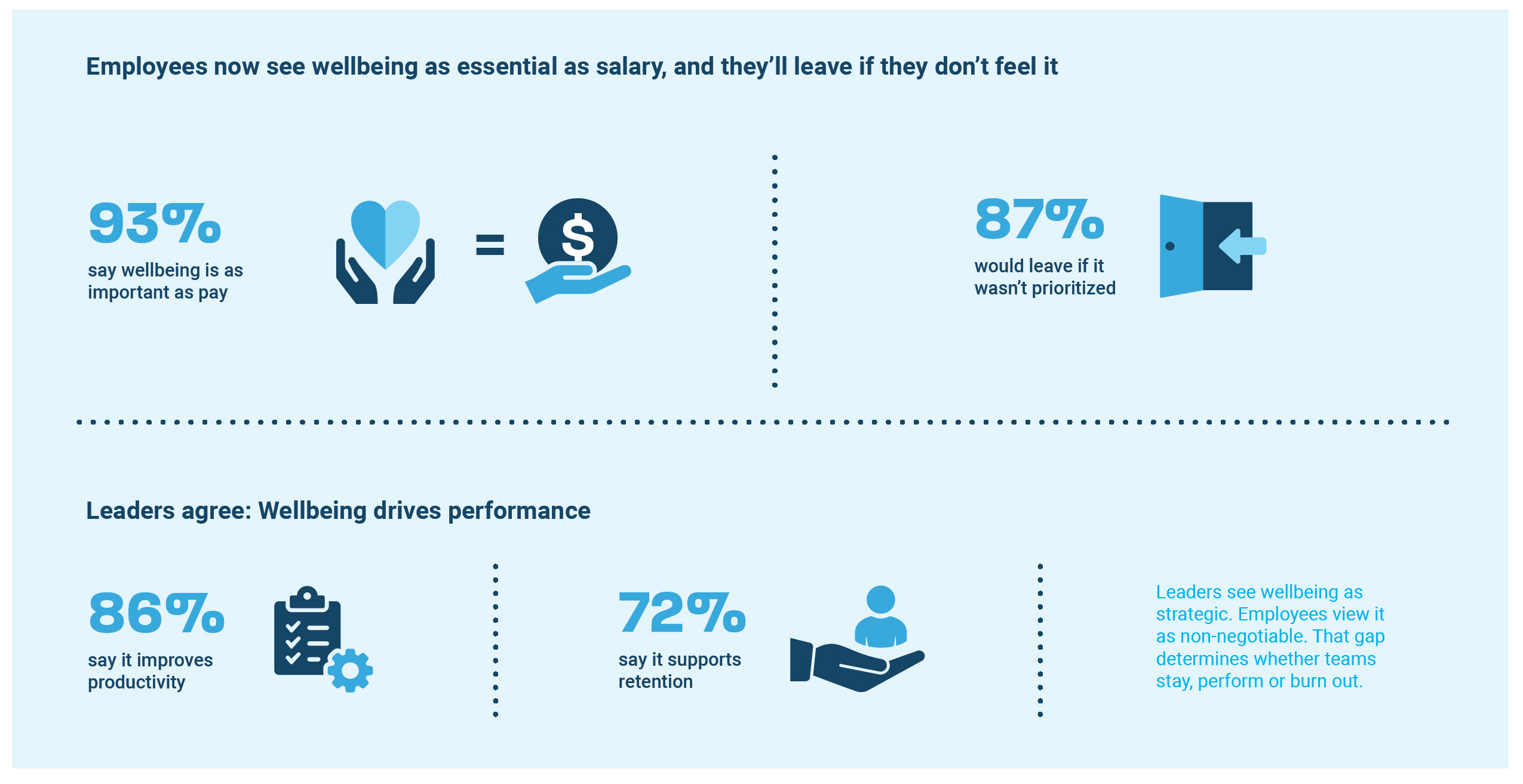
The strategy gap
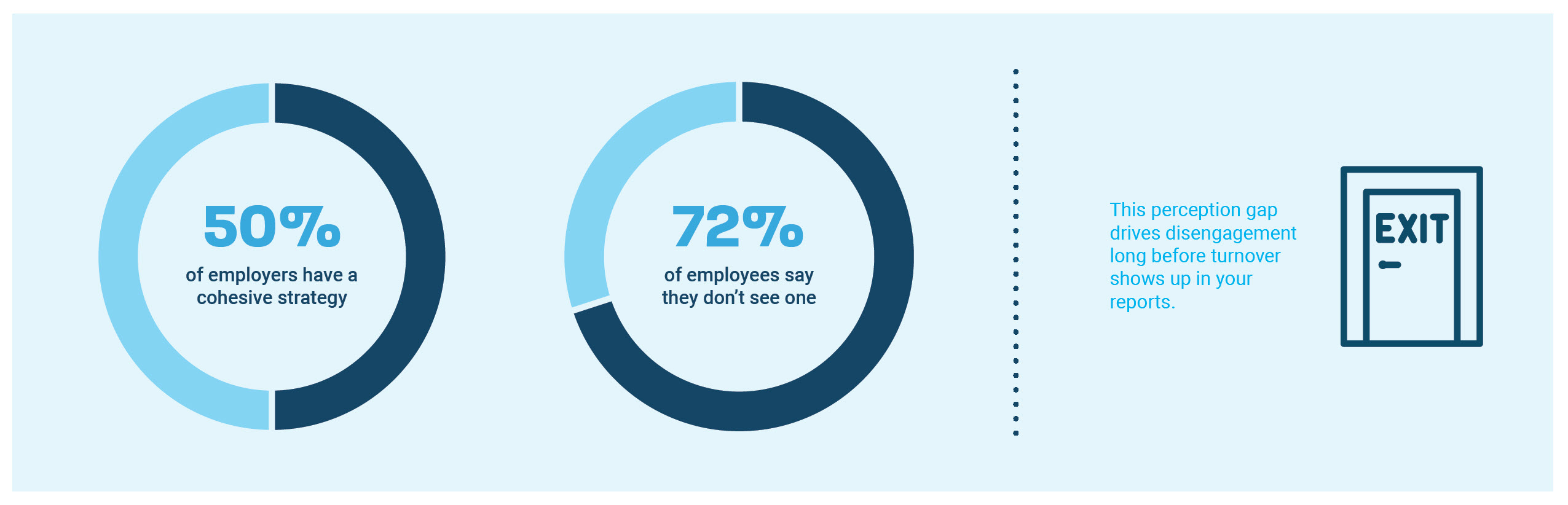
The cost of neglecting wellbeing
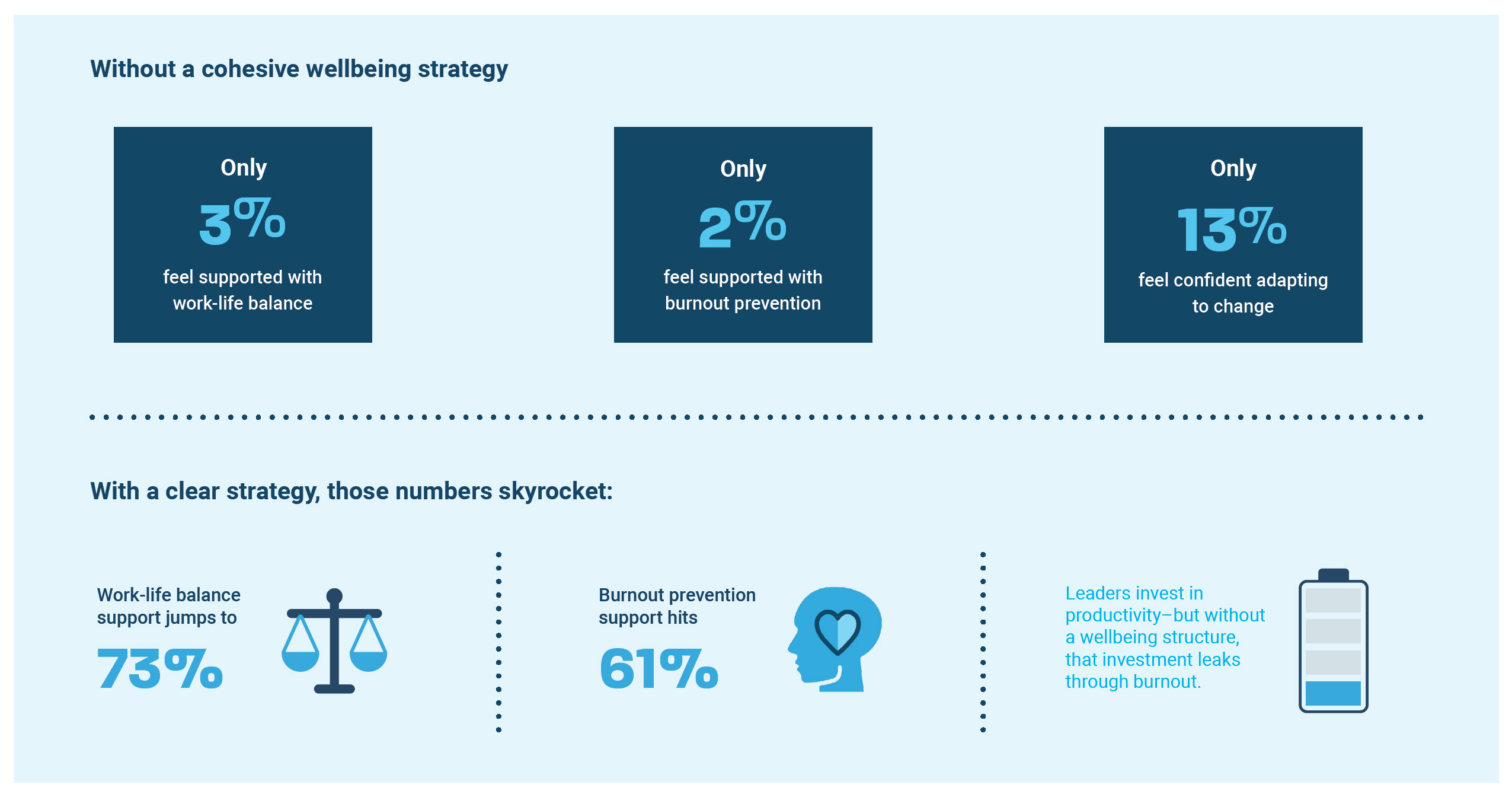
Resilient cultures outperform
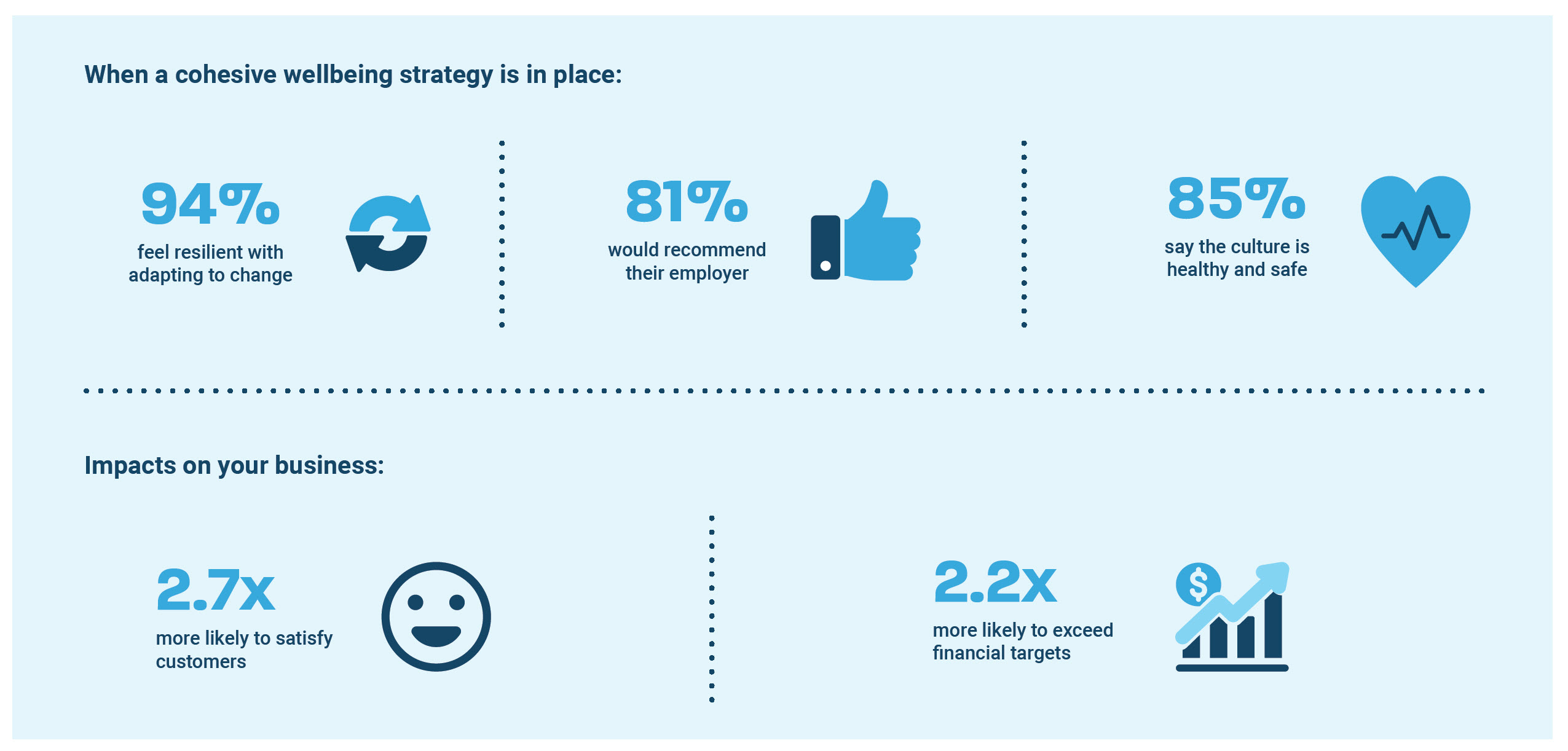
A cohesive wellbeing strategy isn’t just an advantage for your people. It strengthens every metric leaders care about.
Taking the next steps
Wellbeing isn’t a perk—it’s a performance driver. See what your employees might not be telling you and explore the insights shaping high-performing workplaces in 2025.
